
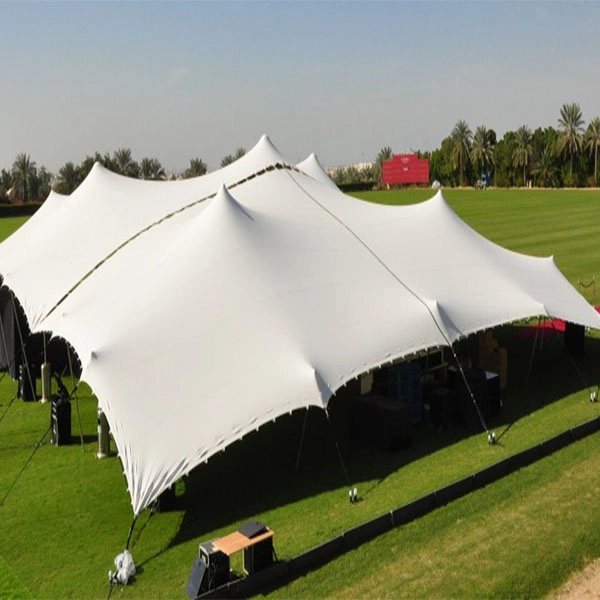
Key Features of Stretch Tents:
- Flexible and Stretchable Fabric:
- Material: Stretch tents are typically made from high-quality, durable, and elastic fabric, often a blend of PVC and polyester or similar materials that allow the tent to stretch tightly over the frame. The fabric is UV-resistant, waterproof, and breathable, ensuring that the tent can withstand various weather conditions.
- Stretching Capability: The fabric’s elasticity allows it to conform to the desired shape and tension. This creates an aesthetic “sail-like” appearance and enables it to be set up in various configurations, such as curved or slanted sides, offering a more dynamic design compared to traditional tents.
- Frame Structure:
- Modular Frame: The frame of a stretch tent is usually made from lightweight, yet durable materials such as aluminum or steel. The structure typically consists of poles that can be adjusted in height and placed in different configurations to shape the tent as needed. The poles are used to tension the fabric, ensuring that it stays taut and secure.
- Free-Form Setup: The stretch tent’s frame can be arranged in various layouts, which makes them ideal for adapting to different environments, whether it’s a flat surface or uneven terrain. The tent’s flexibility allows for creative configurations, from large open spaces to more intimate, cozy setups with sidewalls or partitions.
- Weather Resistance:
- Waterproof: Stretch tents are designed to handle rain and keep guests dry. The fabric is treated to be waterproof, ensuring that water does not penetrate the surface even during heavy downpours.
- UV Protection: The materials used in stretch tents also provide UV protection, which helps to keep the interior cool and comfortable during sunny weather.
- Wind Resistance: The tensioned fabric is designed to withstand moderate to strong winds. The structure can be adjusted to improve stability in different wind conditions, making stretch tents suitable for various environments.
- Interior Space and Design:
- Open, Flowing Design: Stretch tents offer a unique and expansive interior with no internal supports or poles in the middle, providing an open, unobstructed space that can be used for events, dining areas, or lounging.
- Customizable Layouts: The modular nature of stretch tents allows for different sections or areas to be created. The tent can be divided into different zones using partitions or additional fabrics, making them ideal for larger events where multiple activities are happening at the same time.
- High Ceilings: The stretching fabric creates a high ceiling with a smooth, flowing shape, which enhances the aesthetic appeal of the tent. The higher ceiling allows for more spacious event setups or comfortable seating arrangements.
- Ventilation:
- Breathable Fabric: The material used in stretch tents is breathable, helping to reduce condensation and maintain comfort during warm weather.
- Openings and Sidewalls: Many stretch tents have removable or roll-up sidewalls, allowing for greater airflow during warm weather. These features also make the tent adaptable to changing weather conditions, such as closing up to protect from wind or rain, or opening up to allow a breeze.